

The Uncomfortable Truth About How We Prepare Our Children
I have spent more 18 years working for and advising Africa’s most ambitious organisations — across Africa and beyond — on talent strategy and talent acquisition. One pattern has repeated itself so consistently and is concerning: the world is changing faster than our preparation for it. Students entering university today will graduate into an economy that looks meaningfully different from the one we are currently preparing them for — and the gap between the two is widening every year.
Walk into any university careers fair on the continent today and you will find thousands of sharp, eager young people chasing a narrow band of roles: accountant, lawyer, doctor, engineer. These are honourable professions. But they represent a fraction of where the future economy is heading. Meanwhile, the roles that will define the next twenty years — AI engineers, green energy specialists, clinical data scientists, FinTech architects — go largely unmentioned.
This is not a critique of our children. It is a critique of how we, as parents, educators and a continent, have been framing possibility.
“We are not short of ambition. We are short of awareness — awareness of what the world is becoming, and what it will reward.”
Africa’s Paradox: Demographic Dividend or Deficit?
We are told proudly that Africa is young — by 2030, home to the world’s largest youth population. This is spoken of as a dividend. But a dividend only pays if the asset is well-managed. And right now, we are sitting on an enormous, largely uncultivated human asset.
In my work across the continent, I consistently encounter the same employer frustration: they cannot find the people they need. Not because the people do not exist — but because the educational pipeline is misaligned with market reality. A Nairobi FinTech scale-up imports talent from India. A Mombasa manufacturer cannot find an industrial automation technologist. A hospital group struggles to recruit health informatics specialists.
WHAT I SEE ON THE GROUND
What I consistently hear from companies across Kenya and the broader continent is a talent gap that is widening, not narrowing. Employers — from multinationals to fast-growing local firms — are struggling to fill specialised roles in technology, data, healthcare, green energy and financial services. The demand is there. The investment in people is there. What is missing is a pipeline of graduates who are not just competitive within Kenya or Africa, but genuinely world-class. Companies today are not benchmarking their talent against regional standards — they are benchmarking against Singapore, Dubai and London. That is the bar our young people need to be prepared for.
The Eight Sectors Defining the Next Generation
Based on my work across the continent — and in dialogue with global talent intelligence — eight sectors are undergoing transformations significant enough to reshape entire job markets within this decade:
Healthcare is being rebuilt from the ground up.
- AI-assisted diagnostics, telehealth and precision medicine are creating insatiable demand for clinical data scientists and biomedical engineers — roles at the intersection of medicine and technology.
Green energy is an economic imperative, not an idealist’s choice.
- The International Renewable Energy Agency reports 16.6 million people now employed in renewables globally, growing to 38 million by 2030. East Africa’s solar, geothermal and wind resources make these careers particularly relevant.
FinTech and digital finance are rewriting banking and insurance.
- Africa leads the world in mobile money innovation. The next generation must now produce product managers, blockchain architects and RegTech specialists to build on that lead.
AI and cloud computing are the oxygen every other sector breathes.
- Every student — regardless of field — needs to understand how to work with AI. Those who combine domain expertise with AI fluency will be extraordinarily valuable.
Biotechnology is creating disciplines that barely existed five years ago.
- Bioinformatics, agri-biotech and bioprocess engineering are fields where Africa has both deep need and early advantage.
Why We Must Choose Differently for Our Children
I want to speak directly to parents. When your child asks what to study, the temptation is to default to what you know — medicine, engineering, law. These may be right for some children. But the conversation must expand.
The child who studies Health Informatics at an institution that is globally aligned will be more employable in 2030 than the one who studied general medicine without a technology edge. The child who graduates in Renewable Energy Engineering walks into a market where demand has vastly outpaced supply. The FinTech-integrated finance graduate can name their salary at almost any financial institution on the continent.
| A NOTE ON CAREER GUIDANCE IN AFRICAN SCHOOLS “The pace of change in the global economy has been extraordinary — and staying ahead of it requires more than any single institution can offer alone. Schools are doing vital work, and the educators and counsellors within them are deeply committed to their students. But the emerging careers in AI, green energy, biotech and FinTech are moving faster than any curriculum cycle can capture. This is where parents have a real role to play — seeking out additional career intelligence, asking bigger questions, and exposing their children to the full breadth of what the world is now offering. |
Why Malaysia Has Become My Strongest Recommendation
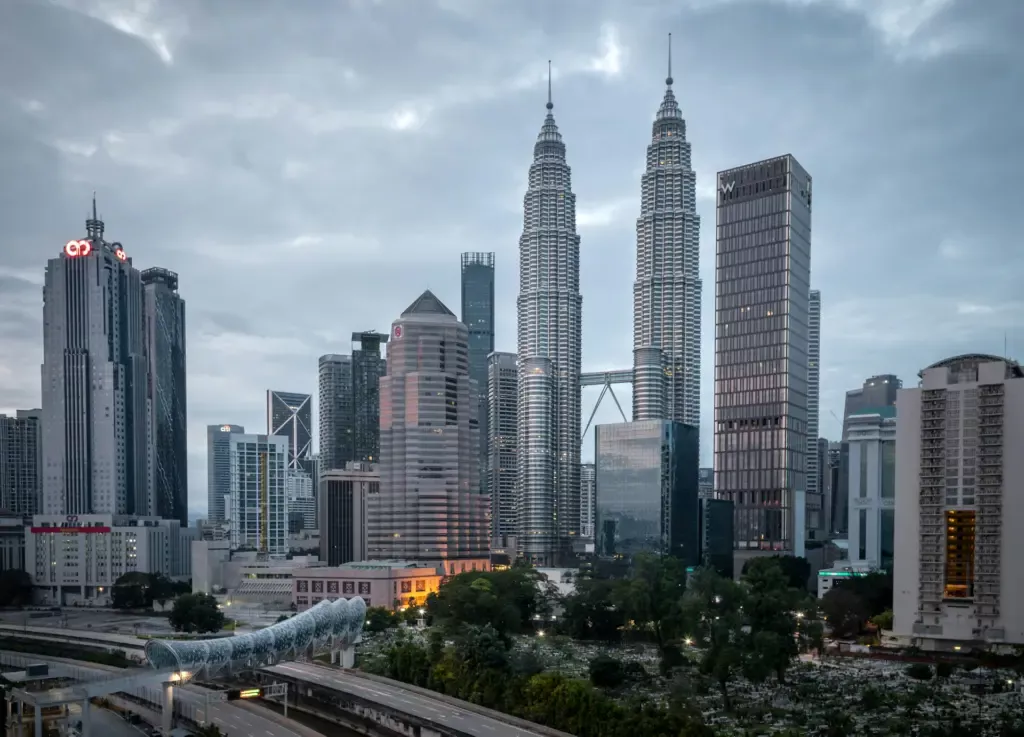
I do not recommend Malaysia from a brochure. I recommend it because I lived it. Twenty years ago, I made the journey myself — a young Kenyan arriving in Malaysia to pursue a degree, uncertain of what to expect, and leaving with an education and an experience that shaped everything that followed.
When I returned recently in January 2026 to visit our CraftEd partner universities… The campuses are modern and genuinely world-class. The laboratories and facilities rival top universities in Europe, USA and Australia. The faculty are engaged, industry-connected… I saw African students thriving. I saw myself, twenty years earlier, in their position.
Why Malaysia Stands Apart — Six Reasons |
🎓 World-class institutions at accessible cost Taylor’s (#253 globally), Sunway, APU, SEGi, University of Cyberjaya, MSU and Quest deliver internationally accredited programmes at a fraction of UK or Australian fees. |
🌐 English-medium with global recognition All programmes are taught in English. Degrees are recognised by professional bodies globally — BEM, ACCA, IFoA, EC-Council and more. |
💼 A real technology ecosystem Malaysia is ASEAN’s fastest-growing technology hub. Students intern in industry, work alongside it, and often receive job offers before graduating. |
🌍 Safe, multicultural and welcoming Malaysia’s diversity creates an environment where African students report feeling genuinely at home. Cost of living is manageable and the environment is stable. |
⚡ Future-focused programmes AI and cybersecurity at APU, healthcare at University of Cyberjaya, engineering at Taylor’s, FinTech at Sunway — curricula built for the economy of 2030, not 1995. |
🔗 Gateway to ASEAN and beyond A Malaysian degree positions graduates exceptionally well for careers across Southeast Asia, the Middle East and globally — increasingly important as African professionals build international experience before returning home. |
The Decision Every African Parent Must Now Make
The future of work is not a threat to be feared. It is a restructuring to be navigated — and for those who navigate it well, the rewards are extraordinary. The African student who enters the global economy in 2025 with the right degree, from the right institution, in a field aligned with where the world is genuinely going, will have more opportunity than any generation of African professionals before them.
But this does not happen by accident. It happens when parents refuse to default to familiar choices out of comfort. It happens when students receive genuine, current, globally-informed exposure to what the economy actually needs.
That is precisely the gap CraftEd was built to fill — not just to place students in universities, but to ensure that the students we place are heading into fields with futures, institutions with reputation, and careers with trajectory.


Even if we do not talk about 5G (specifically), the security talent in general in the country is very sparse at the moment. We need to get more (security) professionals in the system.